Tuesday, January 19, 2010

GD1: Reading #1
Brainstorming:
Tips I liked fromt he reading:
-Don't shoot down any ideas until after the session is over
-Look at examples of other posters and decode the visual strategy
-Encourage outrageous thought and bizarre ideas
Cubing:
Describing, Comparing, Associating, Analyzing, Applying, Arguing
1. Select a topic (issue, person, idea...)
2. Write from each perspective
3. Try not to sabotage yourself
4. Reread what you have written
Clustering/Webbing?Mapping:
-Basically, this is brainstorming
-Start with a central word in the middle and branch off
-You'll focus on areas that do not come to dead ends
-Look over all ideas that branch off... dead ends are not always bad
Heuristics:
-Is an impressive word that means a learning aid or problem-solving technique that uses
"self-education".
-You interview yourself
-Done by using questions and prompts
-Who, what, when, where, why and how
Questions I have:
1. How intricate/detailed should a brainstorming cluster be before you know that it is good enough to use when starting a project? Is it okay to stop if you get stuck completely even if there is more that could possibly be brainstormed?
2. Couldn't you consider Cubing and Clustering similar/the same as one another? Wouldn't they just be different forms of brainstorming that would lead you to the same ideas in the end?
Monday, January 18, 2010
TYPE 2: Statistics on the Genocide in Darfur
UNITED NATIONS - How many people have died in Darfur? Two years ago, the U.N. estimated 200,000. But the man who gave that figure now says it's far too low to be accurate. Sudan has long said it's way too high.
A new mortality survey might settle the question, but the U.N. has no plans for one — they say they are too busy trying to help the living. Activist groups say Sudan's government doesn't want one.
Former U.N. humanitarian chief Jan Egeland said in a recent AP interview there is no question that tens of thousands more people have died since he made the 200,000 estimate in 2006. He cited the dramatic increase in the number of people affected by the conflict and the recent upsurge in fighting, and said 400,000 dead is probably closer to the truth. Source
1915-1918: The Armenian Genocide is considered the prototype for future geno-cides in one of the bloodiest centuries of modern history. Over 1,500,000 Armenians, about half the Armenian population, were killed by Ottoman Turkey during WWI.
1939-1945: The Holocaust 6,000,000 Jews and more than 3,000,000 others considered "undesirables" were killed by Nazi Germany in Europe during WWII.
1975-1979: The Cambodian Killing Fields 1,200,000 Cambodians were killed by Pol Pot and the Khmer Rouge political party.
1994: Rwandan Genocide In a 4-month period, 800,000 Tutsis killed by ethnic Hutu militias.
2004-?: Genocide in Sudan Janjaweed, government-backed Arab militias, have engaged in campaigns to displace and wipe out entire communities of African tribal farmers. Based on conser-vative estimates, tens of thousands of civilians have died and some 1.6 million have been forced from their homes. Source


Friday, January 15, 2010
TYPE 2: Book Cover: Phase One- Research
Define:


Series: Is a group or a number of related or similar things, events, etc., arranged or occurring in temporal, spatial, or other order or succession; sequence.
Sequence: Is a serial arrangement in which things follow in logical order or a recurrent pattern.
Sign: Is a stimulus pattern that has a meaning.
Icon: Is the simplest since it is a pattern that physically resembles what it `stands for'
Index: A, (directly visible, audible, smellable, etc) that correlates with and thus implies or `points to' B, something of interest to an animal
Symbol: Are easily removable from their context, and are closely associated with large sets of other words.
What makes a successful book jacket?
1. In many successful covers the text relates to the image or what the book is about. Text that stands out makes the cover interesting to look at.
2. Illustration. The image on the front gives the reader an idea of the style and content of the book.
My three books...
Here are some links to different sites that provide information about the Darfur Genocide and other places that are struggling with this same problem:
The first thing that came to my mind once we were first assigned this challenge was Africa. I want to create three different book covers that related to the Genocide in Darfur. This is something that I have been interested in for a long time but am not completely knowledgeable about everything that is happening down there. I want to create one cook cover that shows an American's perspective on the situation, one cover showing the perspective of someone who is being effected by the Genocide and the last cover is going to be a book about resolving the Genocide and how it can be stopped. I'm not sure what to do about the author because these will be books that are not 'real' and have no author. I guess I could place my name on there but I do not know if that is the direction I want to head in... I also need to find a lot of different photos and research a lot of information on this subject since it is a large problem and is effecting so many people. I want to make three book covers that have the effect on people where they can look at the book, want to pick up, read it, and hopefully reach out and hopefully help less fortunate people.
Information about the back cover/flaps.
For the book from an American's perspective I want the back cover to look as if it is through our eyes. I want the reader to pick up the book and feel a sense of sorrow and anger at the same time. The back needs to be barren and desolated, therefore showing what a huge problem is going on and how so many people are being killed that there is nothing left. I want a picture of a person/people on the inside front flap. On this book I want two little children's photo on there showing struggle. I want to create a HUGE impact with these photos and make the reader not want to put the book down. On the back flap of every book I think that it would be best to write something about 'how you can help' or 'what you can do to make a difference', along with a brief description of the author.
For the book from the perspective of someone who is having to live through the war and barely able to stay alive I want the back cover to be as if it is through their eyes. I want images of the enemy showing how the Janjaweed militias have decided that killing innocent people is the only way to live. If possible, I want quotes from those who are struggling to be on the back cover of the book, along with on the front. If I could find an image of a family being broken apart by the Janjaweed I would be able to portray the feeling that I want the reader will have when looking at this book. I want everything about this series to be POWERFUL and MOVING. The inside flap will have an image of a single person (child, mother, anyone) who looks devastated and sad. The sorrow and hurt is what I would like this book to show.
The third book is going to be a lot different. First, on the front cover I want some sort of words such as "SAVE DARFUR' or 'TAKING ACTION' or something along those lines in a very large font that takes up the entire front cover. It needs to stand out and show that action needs to be taken to help these people. In certain letters I want images to take the place and form the shape of the letter, this way there is still a way that the series will connect through images. The back of this book would be perfect if I could find an image and possibly a note or piece of writing that showed that help is on the way and there is no need to worry. This book will be all about hope and looking towards starting over. I want the inside front flap to show happiness and a person or millions of people smiling! It needs to show that what we are doing to help, they are more than appreciative of. This book is the motivator, that is for sure.
Word List:
Darfur
Genocide
Sorrow.....................Joy
Death.......................Nascence
Struggle...................Give in
Poor.........................Wealthy
Red Cross
Alone.......................Accompanied
Broken.....................Mend
Torn.........................Mend
Blood
Helpless....................Independent
Innocent....................Guilty
Unfair.......................Just
Heartless...................Spirited
Child Soldiers...........
Torture......................Love
Rape.........................Sustenance
Murder.....................Keep Alive
Combat.....................Peace
Bombing...................Truce
Devastation...............Happiness
Peacekeeping............Fighting
Extermination............Rebuild
Ravish.......................Disenchant
Lost...........................Found
Hope.........................Despair
Barren.......................Fertile
Ruined......................Develop
Desolate....................Cultivate
Overpowered............Released
Militia
Grief..........................Happiness
Tears.........................Smile
Wretched..................Commendable
Anger.......................Joy
Extermination...........Existence
Labor........................Fun
AIDS
Sickness...................Healthy
Kill...........................Create
Action......................Idleness
Protest......................Acceptance
Selfish......................Unselfish
Definitions:
Genocide: The systematic and widespread extermination or attempted extermination of an entire national, racial, religious, or ethnic group.
Extermination: To get rid of by destroying; destroy totally; extirpate
Devastation: : To bring to ruin or desolation by violent action
Innocent: Free from moral wrong
Helpless: Deprived of strength or power; powerless; incapacitated
Rape: The unlawful compelling of a woman through physical force or duress to have sexual intercourse
Murder: To kill or slaughter inhumanly or barbarously
Desolate: Deprived or destitute of inhabitants; deserted; uninhabited
Heartless: Unfeeling; unkind; unsympathetic; harsh; cruel
Selfish: Devoted to or caring only for oneself; concerned primarily with one's own interests, benefits, welfare, etc., regardless of others.
Tone:
Sad, Informative, Inspired to help, Serious, Strength.
I want these book covers to be serious and grab attention at the same time. They need to have a really powerful look to them where the reader will want to pick them up and want to have a feeling of HELP. They should make the reader want to take action and help all of those who are struggling. I would like them to also show the strength that people in Africa have. The tone will be completely serious and hopefully as you look through the series the tone will become more positive, since the last book is about a resolution. They will be all about the inspiration to help.
To Suggest List:
To suggest that this problem can be fixed
To suggest that there are thousands of people that need desperate help
To suggest a sense of sorrow, dispare, anger, the wanting to reach out and help
To suggest thinking about others
To suggest learning and become more informed with the rest of the world
Quotes:
Darfur, in my opinion, was something we could have seen 30 years ago, ... footprint.
"If I had one wish on which to stand, I'd see the weapons all leave Sudan."
"Genocide is an attempt to exterminate a people, not to alter their behavior." Jack Schwartz
"So let us call genocide, genocide. Let us not minimize the deliberate murder of 1.5 million people. Let us have a moral victory that can shine as a light to all nations." Adam Schiff
The Janjaweed are like a grotesque mixture of the mafia and the Ku Klux Klan, ... These guys have a racist ideology that sees the Arab population as the supreme population that would like to see the subjugation of non-Arab peoples. They’re criminal racketeers that have been supported very directly by the government to wage the war against the people of Darfur.
“There two million people in camps, there are people dying everyday... The people in Darfur need the leadership of the movements to seize an opportunity for peace." –Robert B. Zoellick, the American deputy secretary of state
"Adam, Aisha, and I moved under the nearest tree, where the huddled children and their parents made room for us. Children continued to mutely hold onto their mothers and each other, long after the plane was out of sight and its droning barely audible. Just five minutes earlier, I had asked myself why people still felt too insecure to return to the village. The question felt ridiculously naïve now." -Unknown
"I fell to the floor and tried to cover my head with my arms. A boot made contact with my face, a searing white light shooting through my eye socket. Another kick to the head, this one smashing into the fingers of my hand with the crunch of breaking bone."
"When I first came to this country [England], I found that people had heard about what is happening in Darfur and what is happening to my people. And I felt a little bit relieved and happy, because so many people did care about the war in Darfur and were going to help us and support us."
"I'm thinking all the time about taking revenge. I have to do it for the many innocent people who have been abducted, the women who have been raped . . . revenge for people killed. It's very difficult to forgive. I'm not thinking about forgiveness. There will be revenge one day."
Audience Persona:
Payton is a 26-year-old woman who is just recently married to a man she has attended church with for many years. She grew up in a small town in North Carolina and had a traditional family-oriented lifestyle. Shen moved to Charlotte, NC once out of college and married a few years later. She lives in your basic middle-class subdivision and drives a Jeep Wrangler. Payton does not have any children at the time but spends most of her free time, when not at work, doing missionary work for her church and traveling to underserved countries with organizations such as Habitat for Humanity. She is a elementary school teacher so she has the summer off to travel. Her husband, as well, is interested in traveling and church organizations but is not as passionate as Payton. Payton was fortunate enough to go with her mother, an Activist and father, the Priest of her church, on service missions all throughout her childhood. She became more interested in the Darfur Genocide after having visited Africa to aid in the fight against AIDS back when she traveled with her parents. After college and with her husband, she is now devoted to finding a solution to the Genocide. She is still paying off college loans and paying off wedding expenses on a teachers salary but donates to any and as many groups as she possibly can everyday.
Concept Statement:
It's not uncommon to see spare change lying in the cup holders of a car or left over after a dollar has been broken. It is not of any importance because it is just tiny little circles of metal that can't buy much. Usually, it is forgotten or thrown into a pile in a bowl back at home. Then there are the subtle commercials with a child, dirt-covered and emaciated body, sitting in the corner of an abandoned shack, recently bombed and almost completely destroyed. That child sits there and prays to get away from the killing and fighting that he/she has witnessed while sitting, alone, in the abandoned shack. What IS common is the feeling millions of people get from watching those commercials. It is crazy how underserved people can be forgotten about and left to suffer halfway across the world. After watching commercials like these people look at their spare change a little differently and see that it does have importance....
Saturday, December 12, 2009

Saturday, November 28, 2009
TYPE I: Cult of the Ugly...
The Cult of the Ugly
Call out 1: "Ask a toad what is beauty… He will answer that it is a female with two great round eyes coming out of her little head, a large flat mouth, a yellow belly and a brown back."
Call out 2: "Or in the wake of earlier, more serious experimentation, has ugliness simply been assimilated into popular culture and become a stylish conceit?"
Call out 3: “The secret of ugliness consists not in irregularity, but in being uninteresting.”
Fallout
Call out 1: "I like to think it makes us smarter and better and it gives us great exposure."
Call out 2: "I'd much rather spend extra time deciphering dense layers of type and image than be smacked over the head with such a cliche."
Destruction of Syntax
Call out 1: “He will begin by brutally destroying the syntax of his speech.”
Call out 2: “The imagination without strings, and words-in-freedom, will bring us to the essence of material.”
The Background:
Stephen Heller: Was born in 1950. He is American art director, journalist, critic, author, and editor who specializes on topics related to graphic design. Photo
Rudy VanderLans: Was born 1955, Voorburg and is a Dutch type and graphic designer and the co-founder of Emigre, an independent type foundry. Photo
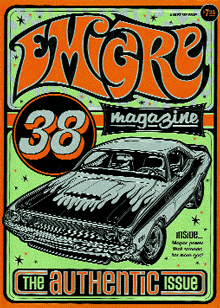
Emigre: Is a digital type foundry, publisher and distributor of graphic design related software and printed materials based in Northern California.
The Cult of the Ugly is a big deal because "Heller argued against the then-popular but now so passé style of deconstructed visuals." "In the early 1990s Steven Heller takes on the word ugly as he sees it applied to graphic design and design education. En route, his views of art history, pop culture and recent design trends are considered in his essay about style and meaning in design."
The History Part One:
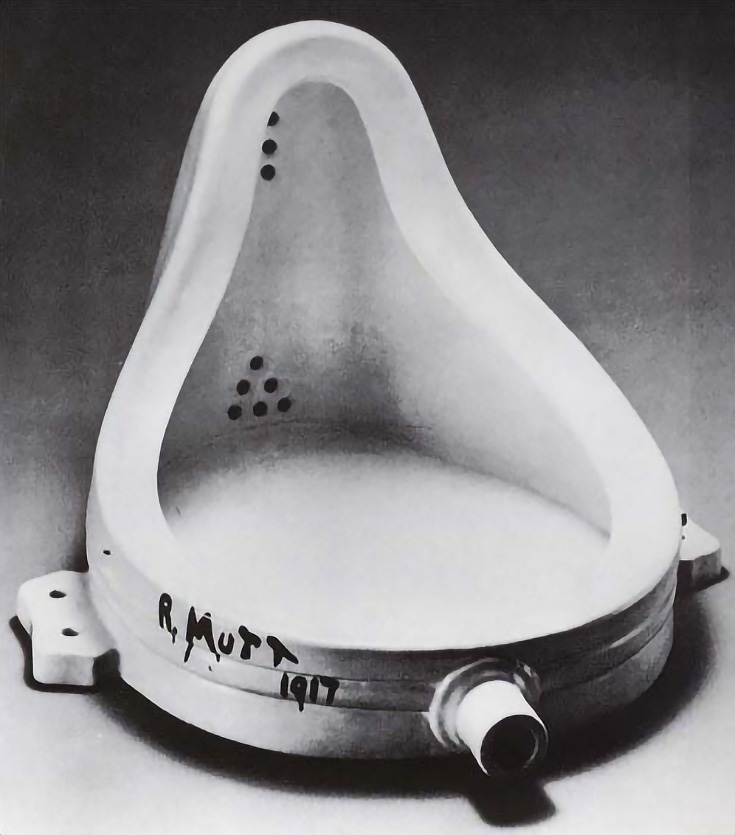
Dada: The style and techniques of a group of artists, writers, etc., of the early 20th century who exploited accidental and incongruous effects in their work and who programmatically challenged established canons of art, thought, morality, etc.
Key people in this movement: Hugo Ball, George Grosz, Sophie Täuber
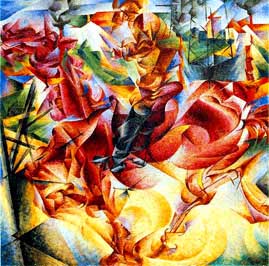
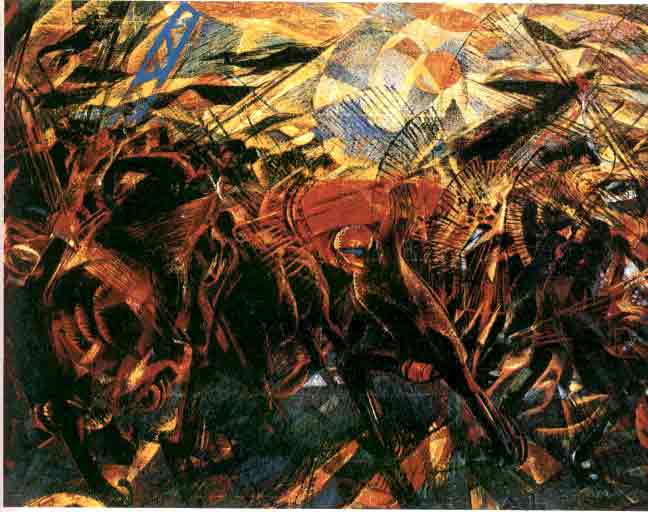
Futurists: Is a follower of futurism, esp. an artist or writer.
Key people in this movement: Filippo Tommaso Marinetti, Umberto Boccioni, Carlo Carrà, Giacomo Balla, Gino Severini
Examples of work: One, Two, Three
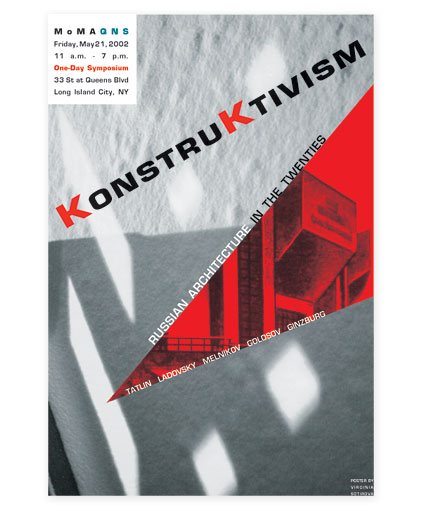
Constructivists: People who follow Constructivism. Constructivism is a nonrepresentational style of art developed by a group of Russian artists principally in the early 20th century, characterized chiefly by a severely formal organization of mass, volume, and space, and by the employment of modern industrial materials.
Key people in the movement: Kazimir Malevich, Wassily Kandinsky
Bauhaus: Pertaining to the concepts, ideas, or styles developed at the Bauhaus, characterized chiefly by an emphasis on functional design in architecture and the applied arts.
Key people in the movement: Marcel Breuer, Le Corbusier, Mies van der Rohe
The History Part Two:
English Punk: A raw expression of youth frustration manifested through shocking dress, music and art.
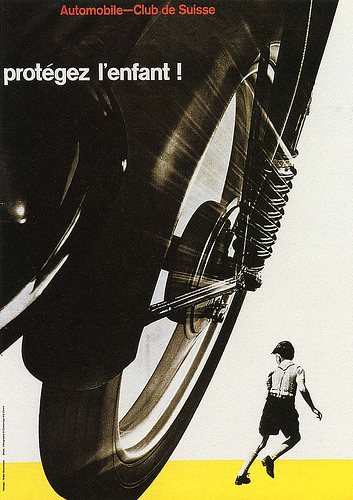
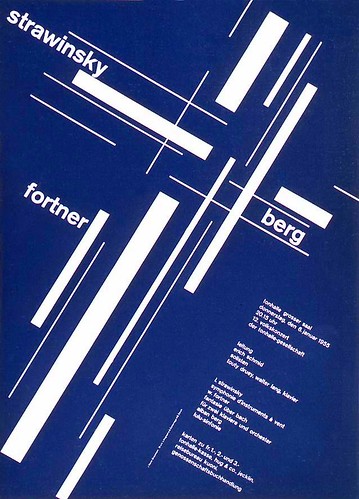
Swiss Design: Is a graphic design style developed in Switzerland in the 1950s that emphasizes cleanliness, readability and objectivity.
Relation to The Cult of The Ugly: This article talks about how society thinks that 'ugly' is something needed in everyday life, that it is something that is looked at as an honorable companion. "Or in the wake of earlier, more serious experimentation, has ugliness simply been assimilated into popular culture and become a stylish conceit? Swiss Punk – which in comparison with the gridlocked Swiss International Style was menacingly chaotic, though rooted in its own logic – was born in the mecca of rationalism, Basel, during the late 1970s. For the elders who were threatened (and offended) by the onslaught to criticise Swiss Punk was attacked not so much because of its appearance as because it symbolised the demise of Modernist hegemony."
Dutch Design: Dutch design is simple and powerful. "The Dutch have the ability to make fun of themselves. Also it's a matter of combining things that usually don't combine at all. Dutch designers are good in using materials that look worthless. The designers give them a new value."
New Wave: refers to an approach to typography that actively defies strict grid-based organizing conventions. Characteristics include inconsistent letterspacing, varying typeweights within single words and type set at unusual angles.
Key People in The Movement: Wolfgang Weingart and April Greiman
The Beautiful:
Paul Rand: Thinks beauty is ‘the separation of form and function, of concept and execution, in not likely to produce objects of aesthetical value." He was a well-known American graphic designer, best known for his corporate logo designs.
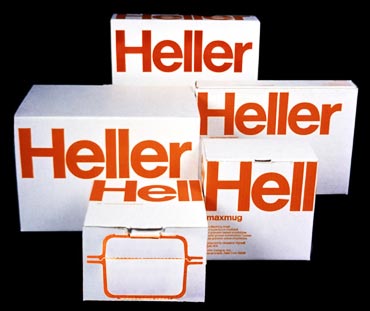
Massimo Vignelli: Is a designer who has done work in a number of areas ranging from package design to furniture design to public signage to showroom design through Vignelli Associates, which he co-founded with his wife, Lella. He has said, "If you can design one thing, you can design everything," and this is reflected in his broad range of work.
Armin Hoffman: Is a Swiss graphic designer. He is well known for his posters, which emphasised economical use of colour and fonts.
Willi Kunz: He was born in Switzerland and immigrated to the United States. Kunz describes his design process in this way: "Developing authentic and original ideas demands careful observation of, and response to, technological, social, and environmental changes. It also requires independent thinking that is attuned to evolving attitudes and fresh experiences rather than cursory glances through history books and design annuals."
Why is this type of work considered beautiful?
Rand: "Rand's paragraphs pack an eloquent punch on behalf of aesthetic values. . . . Even a casual observer of graphic landmarks will be rewarded by this thoroughly engaging and beautifully designed book."
Vignelli: He states. " I like design to be semantically correct, syntactically consistent, and pragmatically understandable. I like it to be visually powerful, intellectually elegant, and above all timeless."
Hoffman: "Hofmann's work is a clear and beautiful expression of the design process, at its most basic."
Kunz: "Kunz breaks down micro-aesthetic quality of letters, numbers, and punctuation; and the macro-aesthetics of typography and design elements working as a whole."
The Ugly:
"The ugly excesses – or Frankenstein’s little monsters like Output – are often exhibited in public to promulgate “the new design discourse”. In fact, they merely further the cause of ambiguity and ugliness. Since graduate school hothouses push their work into the real world, some of what is purely experimental is accepted by neophytes as a viable model, and students, being students, will inevitably misuse it. Who can blame them if their mentors are doing so, too?"
Emigre: Magazine cover
Allen Hori: Design
Jonathon Barnbrook: Poster
Ed Fella: "Work Serves No Cause"
Summary:
The word "ugly" is applied to graphic design and design education. I feel that this article is stating that designers are intentionally making their work ugly to make a point and stand out from other designers. It is interesting to see the view of how failures should be considered moving forward in the world of design as well as those who succeed. I think that this is a different yet more positive out look. Most work is created by experiment... therefore it is most of the time ugly. The thing people are not understanding is that just because it is ugly does not mean that it is not good. There are many different movements that can be considered as movements that provide and demonstrate ugliness. These include the Futurists, where the viewer need to accept non-traditional formats, which sometimes result in confusion. Then there is the English Punk, which expresses raw expression of youth frustration manifested through crazy dressing, music and art. This movement bounces off of the Dada and Futurist movement. What is also considered to be ugly is the Swiss Punk. It was noticed and 'attacked' because not only of its appearance but 'because of symbolized the demise of Modernist hegemony." This shows how those designers who wished to make their work ugly are getting the attention and focus that they want from the viewer. It is just another way to approach the situation, in my opinion. It is a way to create alternative standards. Basically, “Rarely has beauty been an end in itself,” wrote Paul Rand in Paul Rand: A Designer’s Art. And it is equally mistaken to treat ugliness as an end result in itself." Overall, what Heller is trying to get across is that ugliness is OK. It is actually good and used to represent cultures and ideas. People need to take into consideration that creating 'ugly' work is not for just anyone. As Heller concludes, "Ugliness as a tool, a weapon, even as a code is not a problem when it is a result of form following function. But ugliness as its own virtue – or as a knee-jerk reaction to the status quo – diminishes all design."
Subscribe to:
Posts (Atom)